
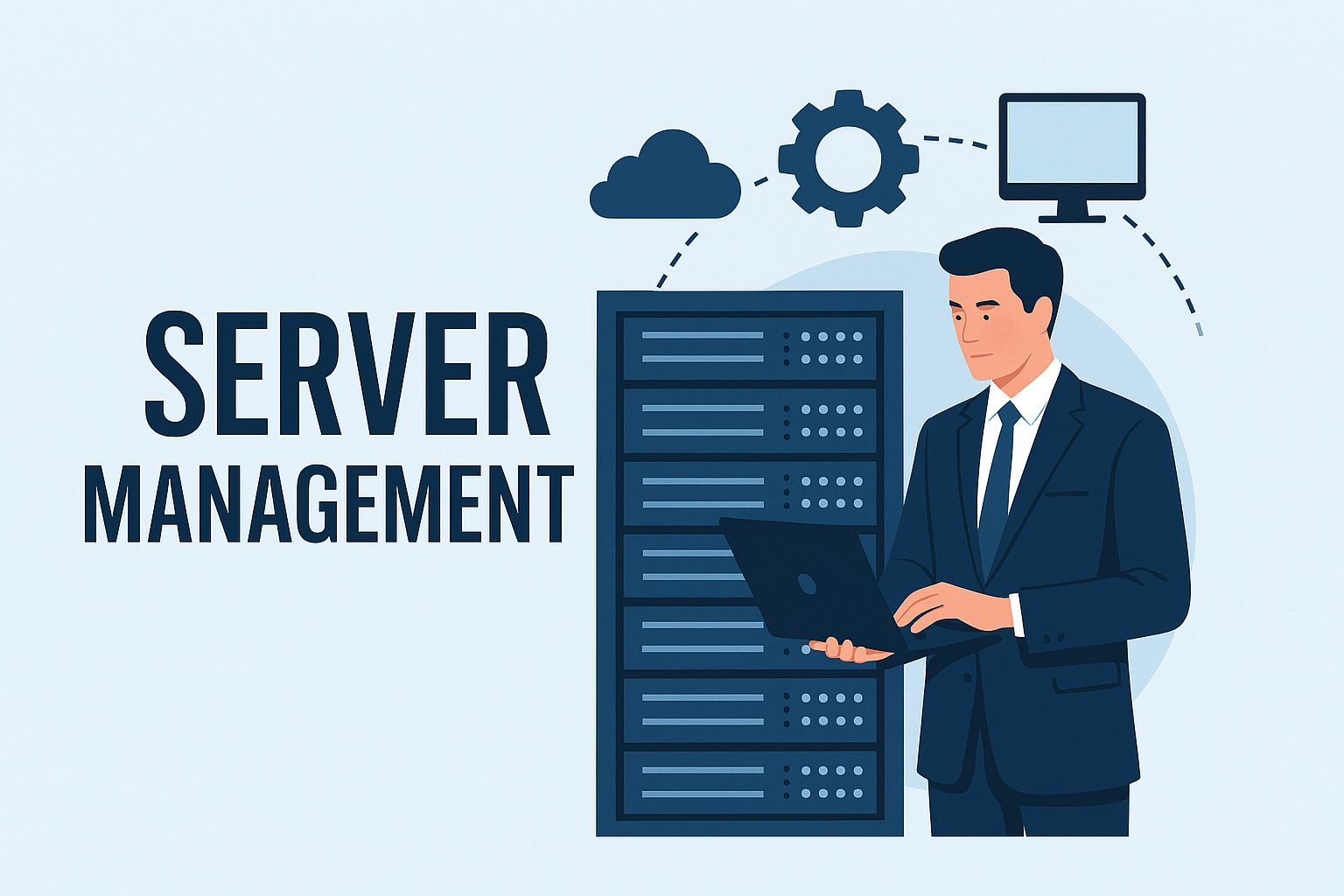
Modern businesses depend on digital systems to operate smoothly. At the heart of every application, website, and database lies a server. Server Management is the process that keeps these systems secure, stable, and available at all times.
Without proper management, servers become vulnerable to downtime, cyber threats, and performance failures. As IT environments grow more complex, professional server management has become essential for maintaining business continuity and scalability.
What Is Server Management and How Does It Work
Server management refers to the ongoing monitoring, maintenance, and optimization of servers to ensure reliability, security, and performance. Servers may be physical machines, virtual servers, or cloud based systems, but they all require consistent oversight.
Core Responsibilities of Server Management
- Server setup and configuration
- Performance monitoring and alerts
- Operating system and software updates
- Security hardening and access control
- Backup and disaster recovery
When these tasks are handled proactively, organizations avoid costly outages and security incidents.
Why Server Management Is Critical for Business Success
Maximized Uptime and Reliability
Downtime disrupts operations and damages reputation. Effective server management identifies issues early and resolves them before they escalate into outages.
Did You Know?
Even a short server outage can lead to lost revenue and customer trust.
Even a short server outage can lead to lost revenue and customer trust.
Enhanced Security and Data Protection
Servers are prime targets for cyber attacks. Proper server management includes firewalls, encryption, patching, and strict access controls to protect sensitive data.
Security misconfigurations remain one of the leading causes of data breaches. Proactive management significantly reduces this risk.
Consistent Performance and Speed
Poorly managed servers lead to slow applications and frustrated users. Performance tuning and monitoring ensure optimal CPU, memory, and storage utilization.
Pro Tip
Automated monitoring tools can detect performance bottlenecks before users notice them.
Automated monitoring tools can detect performance bottlenecks before users notice them.
Types of Server Environments Managed Today
On Premises Server Management
Traditional servers hosted in local data centers require hands on maintenance, hardware checks, and physical security.
Virtual Server Management
Virtual servers allow multiple systems to run on shared hardware. While cost effective, they require careful configuration and monitoring to prevent resource contention.
Cloud Server Management
Cloud servers offer scalability and flexibility but still require management for security, cost control, and performance optimization. Most modern businesses operate in hybrid environments combining all three models.
Common Challenges Solved by Server Management
Unplanned Downtime
Hardware failures and software conflicts can halt operations. Server management reduces downtime through proactive maintenance and monitoring.
Patch and Update Complexity
Keeping servers updated manually increases risk. Automated patching ensures systems remain secure without disruption.
Backup and Recovery Gaps
Without reliable backups, data loss can be catastrophic. Managed server services ensure regular backups and fast recovery.
Is Outsourced Server Management Worth It
Outsourcing server management allows businesses to focus on growth rather than infrastructure issues.
Benefits of Managed Server Services
- Reduced operational risk
- Access to expert engineers
- Lower internal IT workload
- Predictable costs
According to industry research, professionally managed servers experience fewer outages and security incidents.
Best Practices for Effective Server Management
Continuous Monitoring
Real time monitoring ensures rapid response to performance or security issues.
Regular Updates and Patching
Timely updates close vulnerabilities and improve stability.
Strong Security Controls
Firewalls, encryption, and access policies protect against unauthorized access.
Reliable Backup Strategies
Frequent backups ensure data can be restored quickly during emergencies.
How Professional Server Management Supports Growth
As businesses scale, server demands increase. Managed services help organizations expand infrastructure without sacrificing performance or security.
Using expert server management services from IT Company allows businesses to maintain reliable systems while adapting to changing workloads and technologies.
Future Trends in Server Management
Server management continues to evolve with technology.
Emerging Trends
- AI driven monitoring and automation
- Zero trust security models
- Increased hybrid and cloud adoption
- Predictive maintenance
Automation and intelligence are becoming standard components of modern server management strategies.
Frequently Asked Questions
What is the main goal of server management
The primary goal is to ensure servers remain secure, reliable, and high performing at all times.
How often should servers be updated
Servers should receive regular updates and security patches as soon as they are released.
Can small businesses benefit from server management
Yes. Managed server services provide enterprise level reliability without hiring internal teams.
What is the difference between managed and unmanaged servers
Managed servers include ongoing maintenance and support, while unmanaged servers require in house management.
Final Thoughts
Server Management is the backbone of reliable IT operations. From uptime and security to performance and scalability, effective server management protects digital assets and supports long term business success. Organizations that invest in professional server management gain stability, resilience, and peace of mind in an increasingly digital world.