
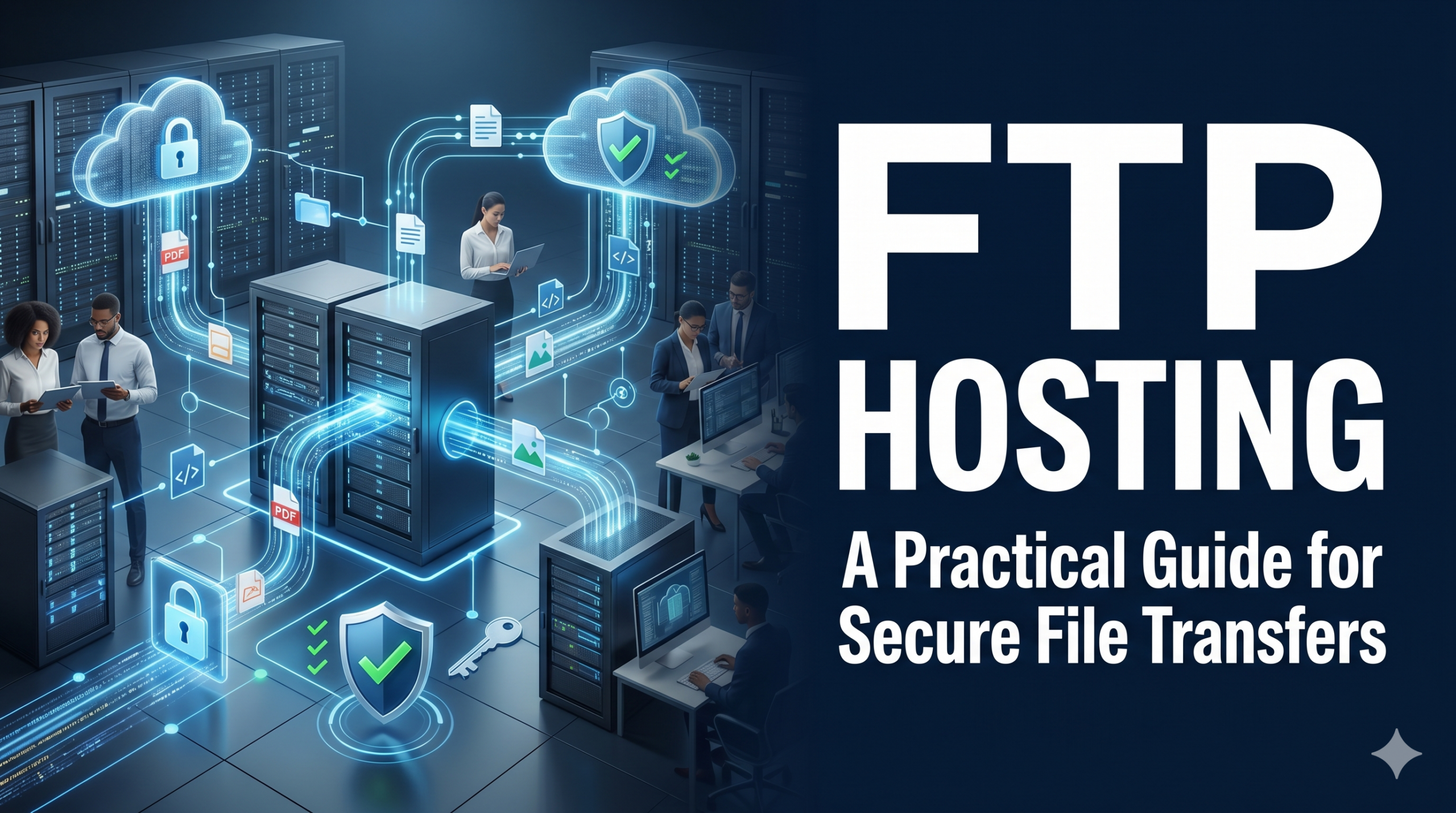
Businesses exchange files every day. However, email attachments and basic sharing tools often fail when files are large or sensitive. That is why FTP Hosting remains an essential solution for many organisations.
It provides a structured, secure, and reliable way to manage files on remote servers. In this guide, you will learn how it works, who should use it, and how managed services simplify everything.
What FTP Hosting Is and Why Businesses Still Use It
FTP stands for File Transfer Protocol. This technology allows users to upload, download, and manage files stored on a remote server.
Unlike casual sharing tools, this approach offers greater control. Businesses can define access levels, manage folders, and move data efficiently. As a result, it is still widely used by developers, agencies, and IT teams.
How File Transfer Protocol Works in Real Use
The process behind file transfer services is straightforward.
A user connects to a server using login details.
The server verifies permissions.
Files move between systems through organised directories.
All activity can be logged for monitoring.
The server verifies permissions.
Files move between systems through organised directories.
All activity can be logged for monitoring.
Because of this structure, companies can transfer data smoothly and consistently.
Common Types of File Transfer Services
Not all file transfer setups are the same. Security and use case matter.
Basic FTP Access
This option allows fast transfers but lacks encryption. It is not suitable for sensitive information.
Secure Transfer Methods
Secure protocols encrypt data while it moves between systems. These options protect information from interception and unauthorised access.
Most modern providers focus on secure environments for business use.
Key Benefits for Growing Companies
Using a dedicated file transfer environment offers several advantages.
Reliable Handling of Large Files
Massive files transfer without size limits or frequent failures.
Greater Access Control
Admins can create users, restrict folders and track usage.
Stronger Data Protection
Encryption keeps files safe during movement.
Smooth Integration
These services work well with websites, applications and automation tools.
Did You Know
Many live websites still rely on file transfer tools to deploy updates because they are faster than browser based file managers.
File Transfer Services vs Cloud Storage
Cloud storage focuses on syncing and collaboration. File transfer services focus on structure and control.
This solution works best when you need:
Controlled access
Large scale uploads and downloads
Direct server management
Automated transfers
Large scale uploads and downloads
Direct server management
Automated transfers
That is why technical teams still depend on it.
Who Benefits Most From This Solution
This approach is ideal for many industries.
Web developers managing live sites
Marketing teams sharing large media files
Finance teams exchanging reports
IT departments handling backups
Ecommerce stores updating product data
Marketing teams sharing large media files
Finance teams exchanging reports
IT departments handling backups
Ecommerce stores updating product data
If your business handles frequent file movement, this system adds reliability.
How Secure Are Modern File Transfer Solutions
Security depends on configuration and management.
Modern setups use encrypted connections, authentication layers and firewall rules. When managed correctly, they offer strong protection against data leaks.
Using a professional provider reduces risk further. A managed service ensures updates, monitoring and best practices are always in place.
Pro Tip
Always use encrypted protocols and unique passwords. Managed services handle these requirements automatically.
Why Managed FTP Hosting Makes Sense
Running servers alone can be risky. Misconfigurations often lead to breaches or downtime.
A managed service includes:
Server maintenance
Security updates
Regular backups
Expert technical support
Security updates
Regular backups
Expert technical support
The FTP Hosting service from IT Company UK provides a secure environment without operational stress.
Supporting Long Term Business Growth
As businesses grow, file needs increase. This type of hosting scales easily. You can add users, storage and automation without rebuilding systems.
It also improves workflow. Teams access files faster. Clients receive data securely. Processes stay organised.
Common Mistakes to Avoid
Many issues come from poor practices.
Using outdated protocols
Sharing login details
Ignoring backups
Skipping activity logs
Sharing login details
Ignoring backups
Skipping activity logs
A managed environment helps prevent these problems.
Frequently Asked Questions
Is this technology still relevant
Yes. It remains a reliable solution for secure and large scale file movement.
Is it safe for sensitive data
Yes, when encryption and proper access controls are used.
Can it replace cloud storage
No. It complements cloud tools rather than replacing them.
Do I need technical knowledge
Basic setups require skill. Managed services remove complexity.
How do I get started
Choose a trusted provider like IT Company UK for a secure managed solution.
Final Thoughts
FTP Hosting is not outdated. It remains a powerful and dependable tool for businesses that value control and security. When managed professionally, it delivers speed, stability and peace of mind.
For organisations handling important files daily, this solution continues to be a smart investment.